






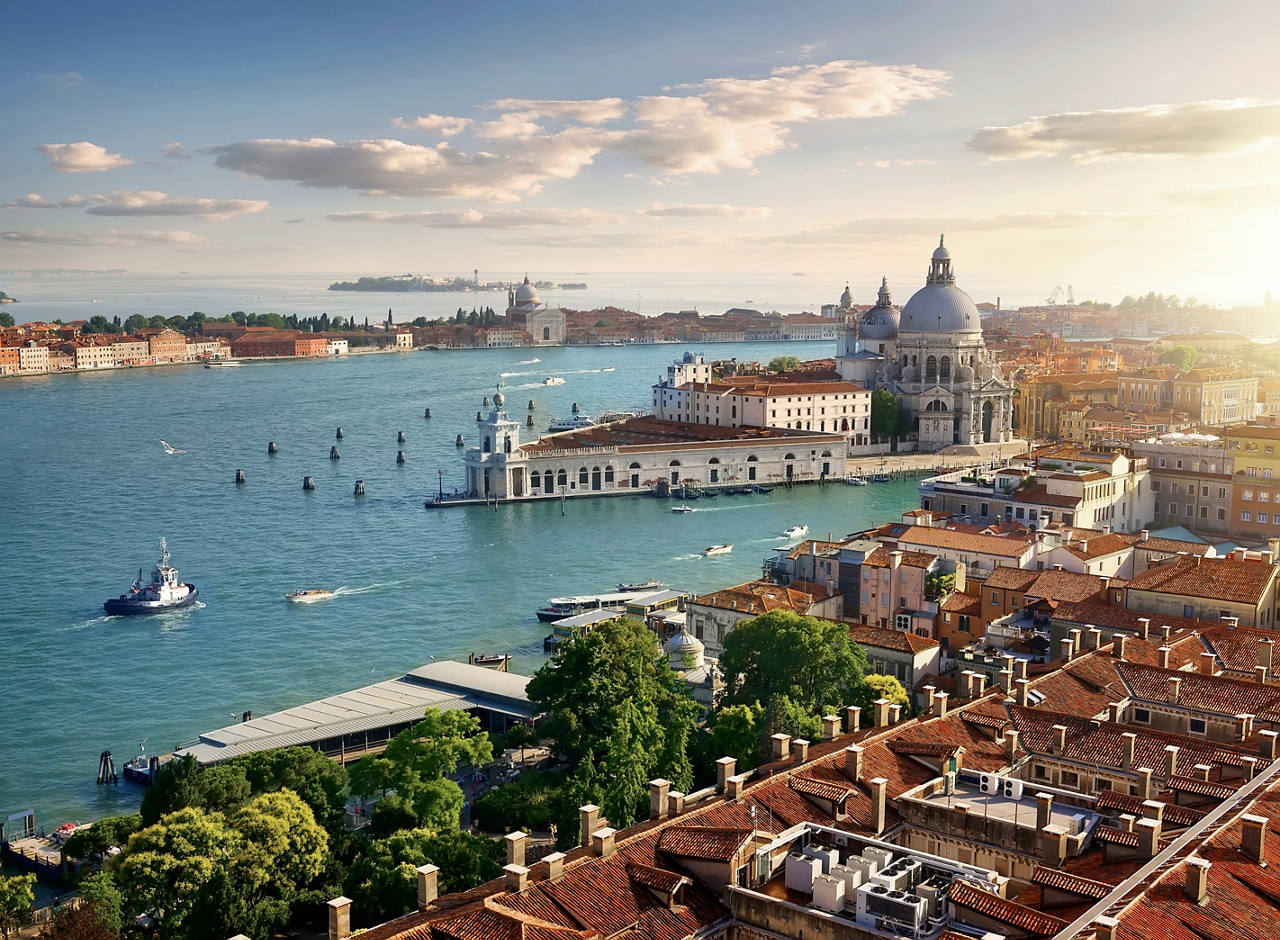

When is the best time to cruise the Adriatic Sea?
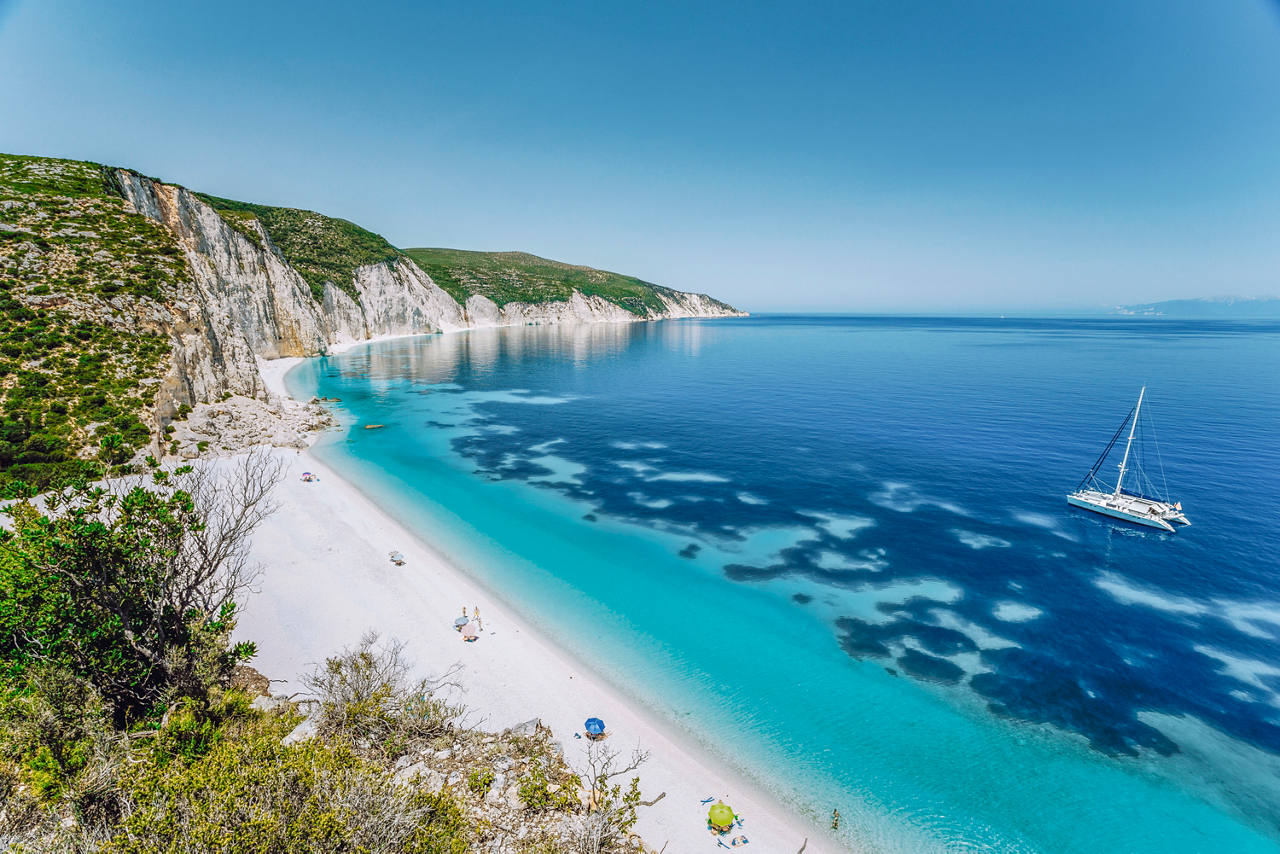
MSC Cruises’ Adriatic cruises are available between the months of May and November, allowing guests to experience this remarkable region at its best. During this time, you’re likely to encounter favourable weather (depending on your cruise route), particularly during summer months. This makes outdoor activities, such as hiking around Barbati Beach in Corfu or sea kayaking around the Bay of Kotor, even more enjoyable.
But as appealing as good weather is, this time of year offers many more reasons to set off on an Adriatic Coast cruise. Festivals, events and cultural celebrations take place across Adriatic countries throughout the season, offering visitors valuable insight into local traditions and ways of life.
From regional cuisine and traditional folk music to theatre performances and community events, there are countless opportunities to experience the culture of Adriatic destinations more deeply.
Put simply, this period offers the chance to see the Adriatic at its finest.
What's the weather like in the Adriatic countries?
Depending on your itinerary and the time of year you travel an Adriatic Sea cruise between May and November is likely to offer favourable weather conditions. Summer months (particularly the peak summer months of July and August) in Italy, Croatia, Montenegro and Slovenia should see a Mediterranean-style climate with plenty of sunshine and high temperatures.
Montenegro and Croatia are likely to experience the most sun and hottest temperatures during this time, as the two countries share similar climates around their coastal regions.
From September, onwards, conditions begin to slowly cool down across the Adriatic as autumn sets in. Temperatures drop a little further in October and November, although still remaining warm and pleasant – some visitors prefer to cruise during this time, as outdoor activities can take place without peak summer heat.
In late autumn you may see some rain, particularly in Italy and Slovenia, and these countries will also experience cooler temperatures than Croatia and Montenegro.
Where do Adriatic cruises depart from?
Adriatic cruise holidays depart from a range of locations, meaning it easy to find an option that suits you. Fly & Cruise packages provide a stress-free travel option allowing you fly directly to Venice, where you’ll transfer to the Port of Marghera and sail off on one of our Eastern Mediterranean Adriatic itineraries.
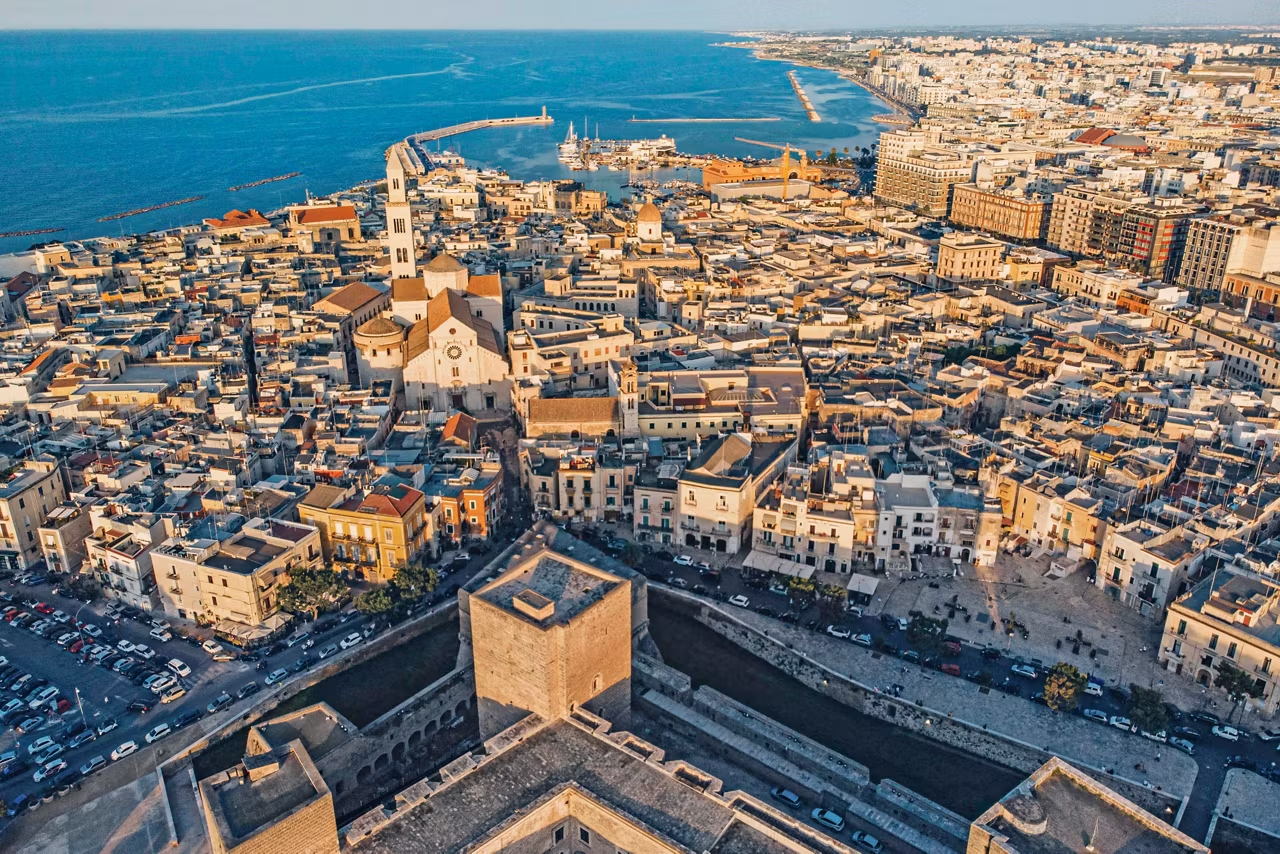
Alternatively, begin your Adriatic adventure from another atmospheric Italian city, such as Ancona, Bari, Brindisi and Trieste. You can also set off from Croatia's historical marvel, Split.
Once your journey begins, settle in and prepare to experience the very best of the Adriatic region. Discover Slovenia with a stop in Koper or explore Croatia’s enchanting Dubrovnik, before delving deeper into the country with visits to Zadar, Rijeka and Šibenik. Alternatively, venture further east and lose yourself in two of Montenegro’s captivating cities, Kotor and Bar.
Then there’s Greece and its endless charms, from the history-filled capital of, Athens, to its magical islands, which offer sublime beaches and traditional tavernas.
Whatever departure point you choose, rest assured that your Adriatic odyssey will be one to remember.
What countries are part of an Adriatic cruise?
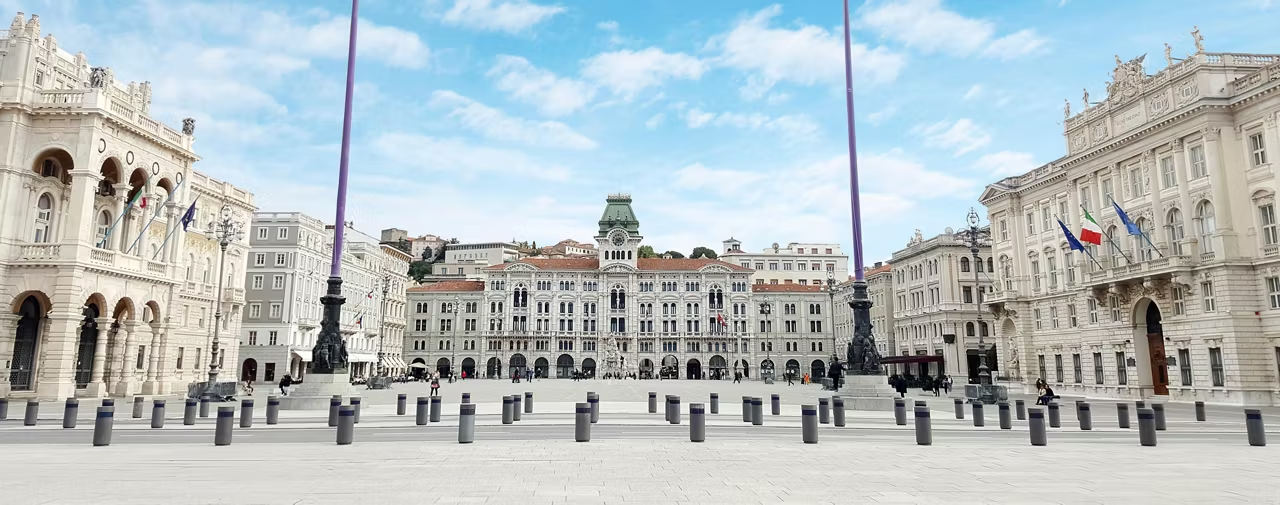
Cruises to the Adriatic allow you to experience a range of bucket list countries, covering some of the best sites and attractions each country has to offer. Come face-to-face with Italy’s historical marvels in cities like Venice and Trieste, or sample Italian coastal life in Ancona.
Croatia provides outstanding beaches, the globally acclaimed Old Town in Dubrovnik and an architectural masterpiece in Split through the remarkable Diocletian's Palace. Montenegro, meanwhile, is home to the atmospheric medieval city of Kotor, surrounded by towering mountains.
Slovenia, while perhaps less well known than some of its Adriatic neighbours, is a beautiful and rewarding destination. Its landscapes are wonderfully varied – granging from thick woodlands to shimmering lakes and snow-capped mountains – while its Adriatic coastal stretch of a little over 45 kilometres is a vibrant area to spend time in.
Many Adriatic cruise itineraries also include stops in Greece and its many islands. This adds yet another dimension to these voyages, allowing guests to delve into the ancient historical sites of Athens or soak up island life on spots like Mykonos, Santorini and Corfu.
How much is an Adriatic cruise?
The price of cruises to the Adriatic will vary depending on the length of your trip and the countries visited on your route. But since MSC Cruises is committed to catering for a wide variety of budgets, there’ll be an Adriatic trip that chimes perfectly with your allocated spending. This means that everyone can enjoy this famed European region – take a look at the latest Adriatic cruise deals to find your next holiday.
What to pack for an Adriatic cruise?
When packing for Adriatic cruises, variety is key. Consider what month(s) you’re travelling in, and your destinations, as these will both inform what to pack. If you’re travelling during the peak summer months – July and August – to any Adriatic destinations, pack for hot weather, including a sun hat, light layers, sunglasses, swimwear and sandals or similar footwear.
For cruises in autumn, bring a few extra layers and some warmer clothing, including a jacket and/or rain jacket, as you may encounter cooler temperatures and showers. However, it’s still worth packing for milder conditions too, particularly if your itinerary includes Croatia or Montenegro.
Whatever month you’re travelling in, make sure to pack essentials, such as comfortable footwear (especially for any shore excursions), sun lotion and comfortable clothing for relaxing onboard your ship. If you want to attend onboard gala nights or formal evening dinners and events during your cruise, also pack some smart attire for the occasion as well.
How long is an Adriatic cruise?
An Adriatic Sea cruise will vary in length depending on the itinerary you choose, but most of our cruises in this region last between seven and 12 nights. This includes seven-night voyages through literal Mediterranean hotspots like Kotor in Montenegro, Dubrovnik in Croatia and various Greek Islands, such as Santorini and Corfu.
If you’re short on time, there are also Mediterranean-focused Adriatic cruises lasting five or six nights, and even a three-night itinerary that begins in Trieste and visits several stops on the Croatian coast before ending in Bari. And if you only have two nights to spare, one of our routes begins in Venice before visiting Zadar and then ending in Bari, just two nights later.
At the other end of the scale are our cruises lasting 11 and 12 nights, which explore the Mediterranean in depth. These itineraries cover a wide range of bases on their stops, calling at multiple ports across Italy, Croatia, Greece and Cyprus.
This range of options allows you to find an Adriatic cruise length that suits your schedule and budget.
What is the currency in the Adriatic Sea countries?
The euro is used in Italy, Slovenia, Montenegro and Greece. This means you only need to arrange one type of currency to bring with you on Adriatic cruises, making your trip simpler and easier.
What is the time zone in the Adriatic Sea countries?
It’s always useful to know what time zones will be used in the countries visited on your Adriatic Sea cruise. Italy, Slovenia and Montenegro all use Central European Time (CET), which is one hour ahead of GMT and aligned with British Summer Time (BST) during the summer months.
Greece uses Eastern European Time (EET), which is one hour ahead of CET and one hour ahead of BST during the summer period.


